Artículo: Canvas vs Poster Wall Art: Which One Is Right for Your Space?
Canvas vs Poster Wall Art: Which One Is Right for Your Space?
When choosing wall art, most people focus on the artwork itself. But there’s another decision that matters just as much: the format.
Canvas and poster prints can feature the exact same design, yet feel completely different once they’re on your wall. The right choice depends on the room, the mood you want to create, and how permanent you want the piece to feel.
If you’ve ever found yourself wondering whether canvas or poster art makes more sense for your space, this guide will help you decide without overthinking it.
What’s the Difference Between Canvas and Poster Art?
Canvas wall art is printed on thick, textured material and stretched over a wooden frame. It feels substantial and architectural, even without an additional frame. Because of its depth, canvas tends to read as more permanent and gallery-like.
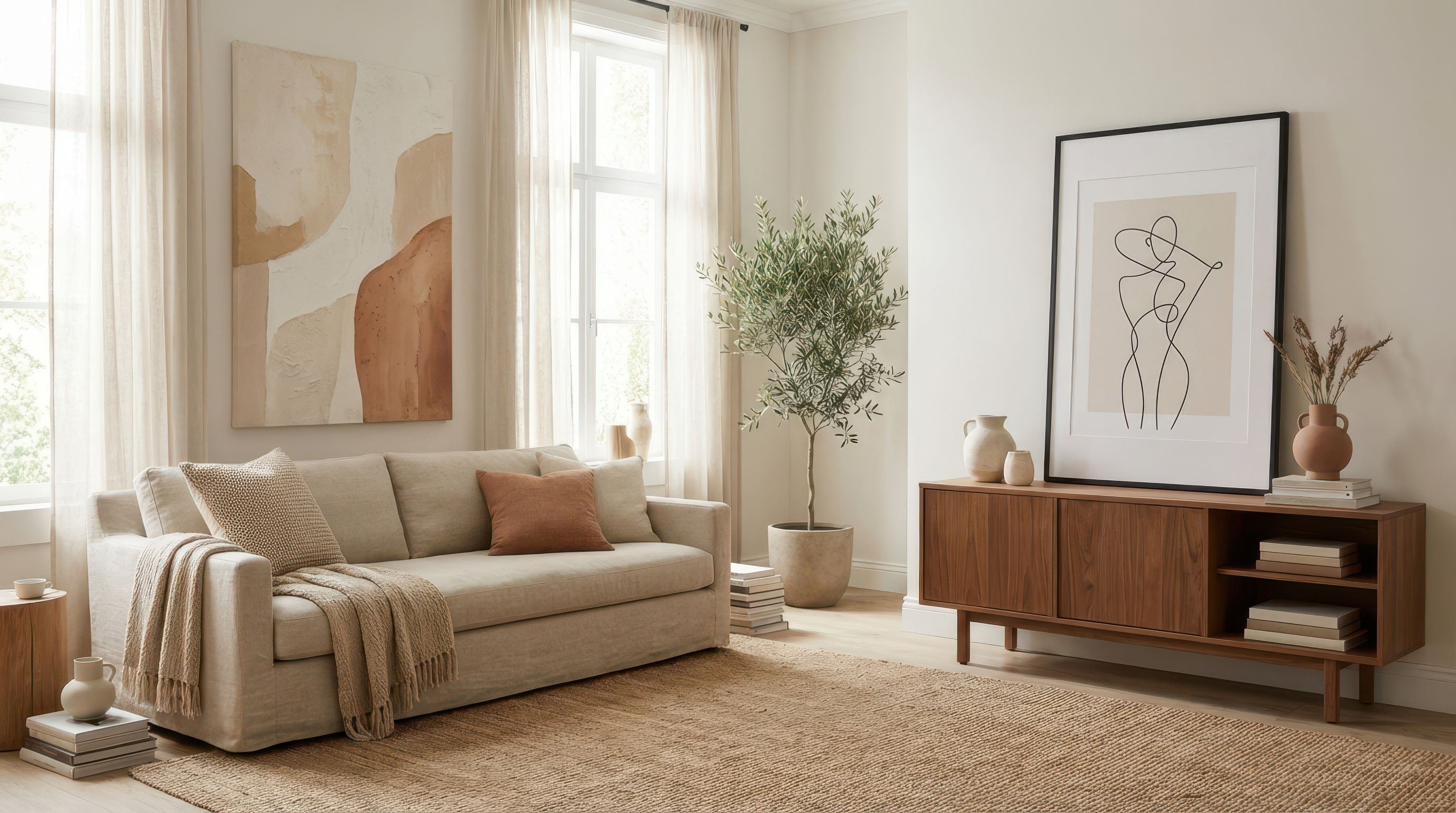
Poster prints are printed on premium paper and are usually framed behind glass or acrylic. They feel lighter and more flexible, both visually and practically. Posters often lean toward an editorial or collected look rather than a statement piece.
Neither option is better overall. They simply serve different purposes.

Living Room: Where Scale Matters Most
In most homes, the living room has the largest walls and the most visual weight. This is where canvas wall art usually shines.
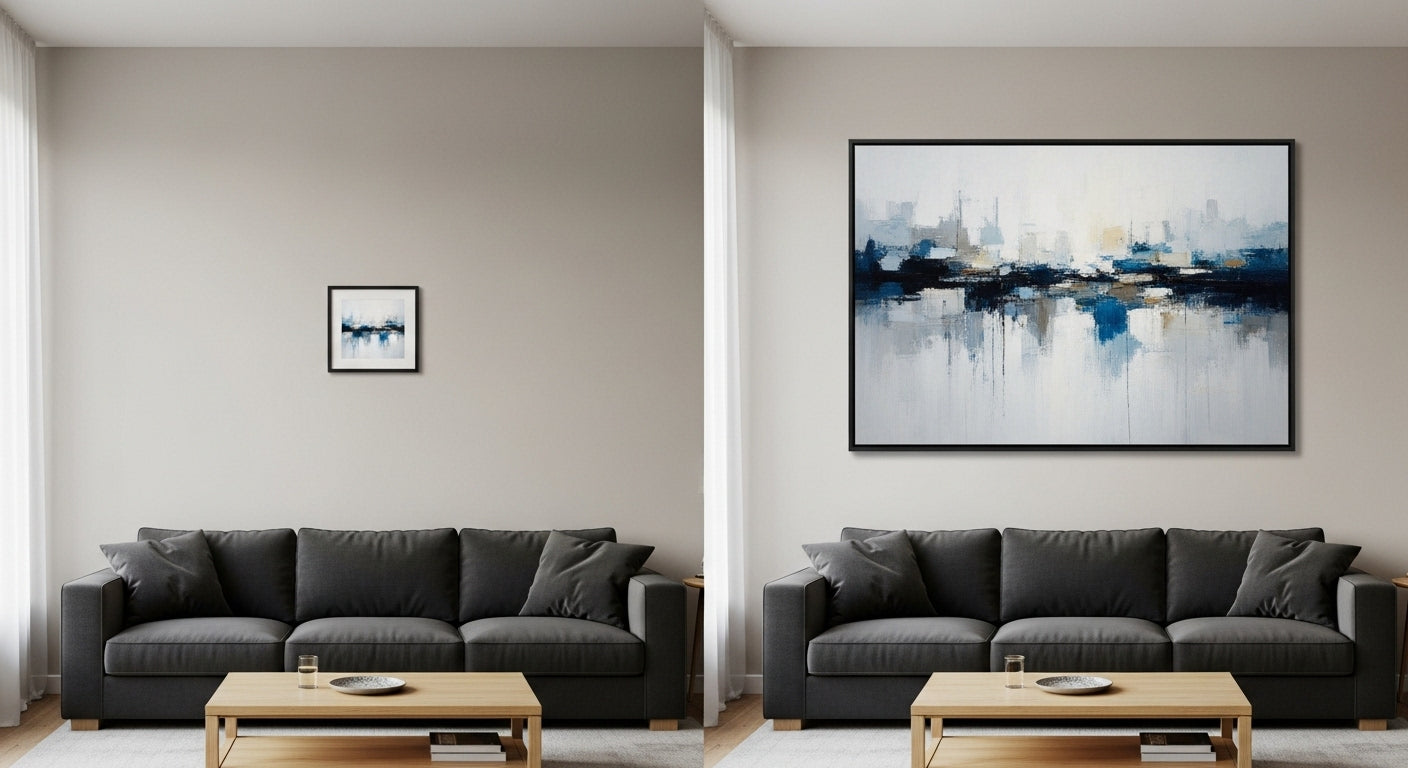
Canvas works especially well here because it fills space confidently and creates a clear focal point. Large pieces above a sofa or console feel intentional rather than decorative.
Poster prints can still work in living rooms, especially as part of a gallery wall or in smaller spaces. Framing becomes important here. Thin black, white, or natural wood frames keep the look polished rather than casual.
Recommended canvas sizes for living rooms usually start at 30×40 inches and go up from there, depending on wall width.

Bedroom: Calm, Not Overpowering
Bedrooms benefit from art that supports rest rather than dominates the room.
Canvas above the bed can work beautifully if the artwork is calm and the scale feels balanced. It creates a grounded, hotel-like atmosphere.
Posters are often better suited for bedroom side walls, reading corners, or the wall opposite the bed. Their lighter presence keeps the room feeling personal and relaxed.
If you like changing your space often, posters are usually the easier option.
Dining Room: Light and Conversational
Dining rooms tend to work better with framed poster art.
Posters feel more editorial and relaxed, which suits spaces meant for conversation. Horizontal compositions above a dining table or sideboard are especially effective.
Because people are seated most of the time, artwork in dining rooms can also be hung slightly lower than in living spaces.

Hallways and Entryways: Keep Things Light
Hallways and entryways are transitional spaces, so heavy art can feel overwhelming here.
Poster prints work particularly well in these areas. Vertical formats, smaller sizes, or a simple series of framed pieces help maintain visual flow without crowding the space.
Canvas can still work, but usually at a smaller scale and with plenty of breathing room around it.
Home Office: Think About the Camera
If you work from home, art placement often doubles as a background for video calls.
Canvas tends to read cleaner and more intentional on camera, especially when placed behind your desk. Posters are better suited for side walls or areas that are not constantly visible on screen.
If you like refreshing your environment, posters offer more flexibility over time.
A Simple Way to Decide
Instead of focusing only on price or trends, ask yourself one question:
Do I want this piece to feel permanent or flexible?
Canvas tends to feel anchored and long-term. Posters feel adaptable and collected. Once you frame the decision this way, the choice usually becomes clear.
Final Thoughts
Canvas and poster art are not competing formats. They are tools.
When you choose the right format for the right room, wall art stops being decoration and starts shaping how the space feels. Start with one room, trust proportion and balance, and let the format support the atmosphere you want to create.